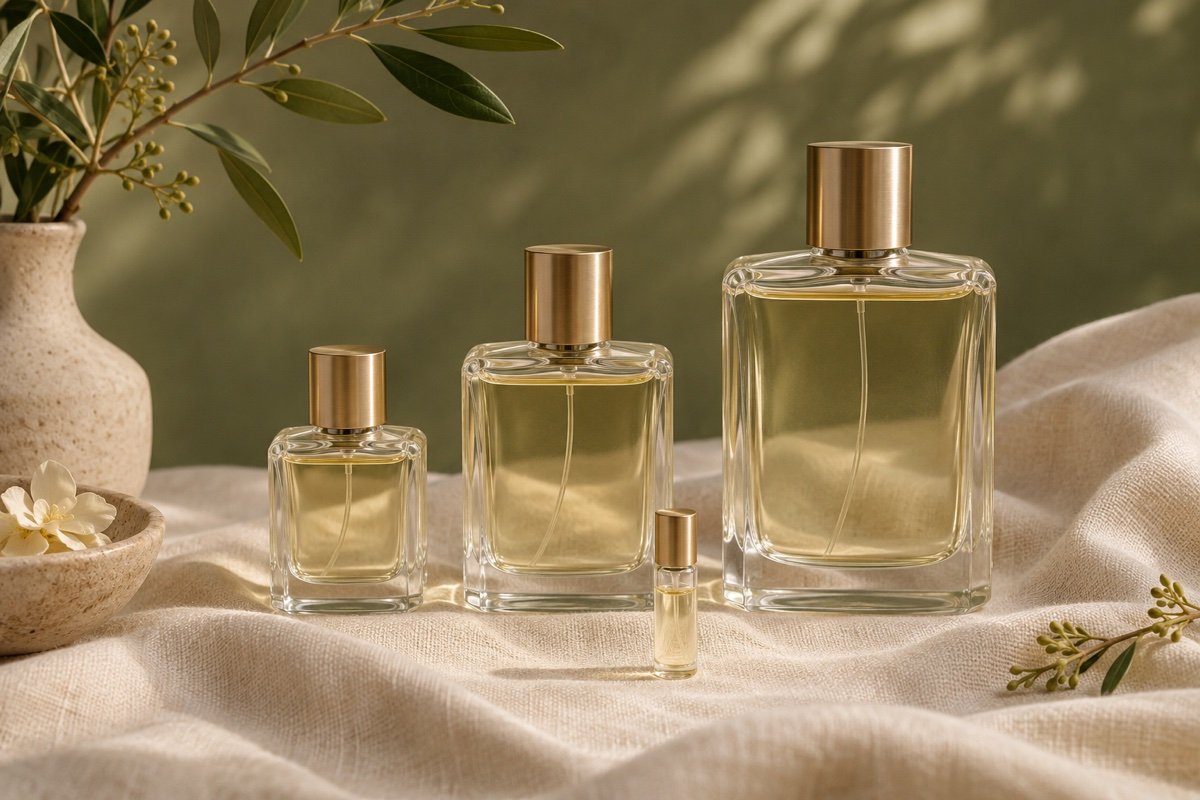
A 100 mL bottle can be cheaper per mL and still be the more expensive purchase. In the example below, the larger bottle saves on unit cost but requires another $21.50 at checkout. Both numbers matter.
What the extra $21.50 buys in this example
These are hypothetical inputs for two separate one-bottle orders of the same fragrance and concentration in equally acceptable condition. They are not live retailer offers or tax rates.
| Input or result | 50 mL | 100 mL |
|---|---|---|
| Discounted item price | $40.00 | $60.00 |
| Shipping | $5.00 | $5.00 |
| Example tax/fees | $3.00 | $4.50 |
| Delivered total | $48.00 | $69.50 |
| Item price per mL | $0.80 | $0.60 |
| Delivered price per mL | $0.96 | $0.695 |
The extra spending buys another 50 mL. If you want that quantity, the larger offer deserves consideration. If you would not otherwise buy that much, the lower unit price is not a reason by itself. If you are unsure about the scent, resolve the preference with a sample before treating the larger bottle as better value.
The calculation: delivered cost per mL = the final total you will pay ÷ labeled volume in mL. Item price per mL omits shipping, tax and fees, so it answers a narrower question. Use the accepted checkout discount, not a crossed-out reference price.
Try your own numbers
Which bottle costs less per mL?
Use the same fragrance, concentration and bottle condition. Enter the full delivered total in USD, including shipping and tax. Compare one-bottle orders; mixed baskets need a consistent cost allocation.
When the neat unit-price answer is misleading
- The products do not match
- Match the full fragrance, concentration and acceptable condition first. The identity checklist prevents a cheaper flanker from being counted as the same bottle.
- One price excludes delivery
- Use the checkout total for each order. HottPerfume’s captured policy lists shipping charges; the item-page amount alone is not necessarily the delivered cost. Check the merchant's current shipping terms
- The basket contains several items
- Compare complete baskets or state a consistent way to allocate shared shipping. Charging the full shipping amount to every bottle counts the same cost more than once.
- One bottle is a tester
- Decide whether its actual condition and packaging are acceptable using the tester-offer checks. Do not bury that difference inside a cheaper per-mL figure.
Use the stated mL rather than inferring equivalence from ambiguously rounded ounce labels. This calculation can compare the cost of a quantity; it cannot tell you how much fragrance you will enjoy owning or how many wears you will get.
Does the cheaper milliliter mean a better purchase?
Use the final delivered cost divided by the labeled mL for matching offers. Then make the separate decision: do you want to pay for that much perfume?
Which part of the bargain still needs checking?