Count useful choices, not bottles
A small collection might contain one fragrance you repeatedly enjoy, or several with different purposes. The useful question is not whether you have completed a set of categories. It is whether you would choose each bottle over the alternatives you already own.
Give the current shelf a job description
| Bottle | When I reach for it | What I would miss without it |
|---|---|---|
| Your most-used fragrance | Describe a real occasion or mood, not “anytime” by default | Name the particular character or convenience you value |
| A bottle you rarely choose | Identify the reason it stays on the shelf | Decide whether it fills a real preference or only a theoretical slot |
| The sample you want to buy | Name a situation in which it would win the choice | State what changes compared with your existing option |
This is a personal worksheet, not a rule that every bottle needs a separate season or occasion. Two similar fragrances can both be worthwhile if you genuinely prefer their differences on different days. If evenings are a real gap in that worksheet, the men’s evening shortlist starts with closeness, aromatic spice or wanted honeyed sweetness. The women’s evening shortlist separates creamy spice, a layered floral and honey-centered preferences for that occasion.
Choose among addition, replacement and no purchase
Addition
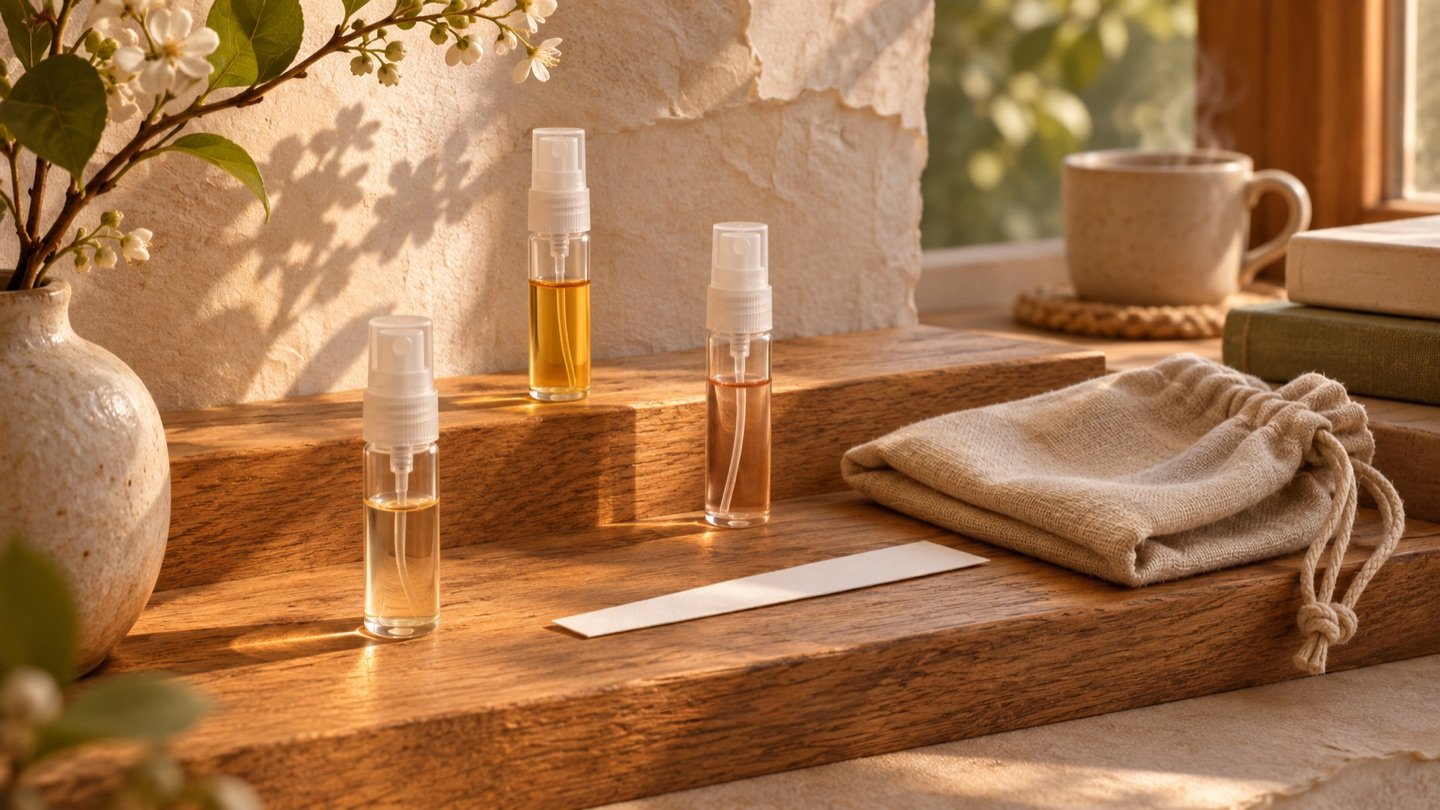
The sample supplies a preference you want to use and cannot currently satisfy. Keep testing that purpose rather than collecting a label.
Replacement
You prefer the sample for a role already covered. Recognize it as a replacement decision; you do not have to invent a new occasion.
No purchase
You enjoyed the sample but would usually choose something you already own. Enjoying the trial is a complete outcome. The Soleil Blanc EDP review follows that distinction through a liked bottle that was ultimately seldom chosen.
Make the difference specific enough to test
Carbon raises a useful familiarity question in its customer accounts. Amber Pour Homme instead raises a soap-texture preference. A brand name shared by two bottles tells you less than those particular effects.
If a new sample promises a different direction, such as Pink Sugar’s candy theme, ask whether you want to wear that direction rather than merely own an example of it. Then choose a quantity consistent with expected use through the bottle-size guide.
A purchase pause that produces an answer
Before ordering, write: “On a day when I want ___, I would choose this instead of ___ because ___.” If the final blank stays vague, another wear is more informative than another bottle. No fixed waiting period or minimum collection size is required.
Give the next bottle a reason to win
A collection becomes useful through the choices you actually make. An enjoyable sample can end as an addition, a replacement or simply an enjoyable trial.
Which role can you explain without forcing it?